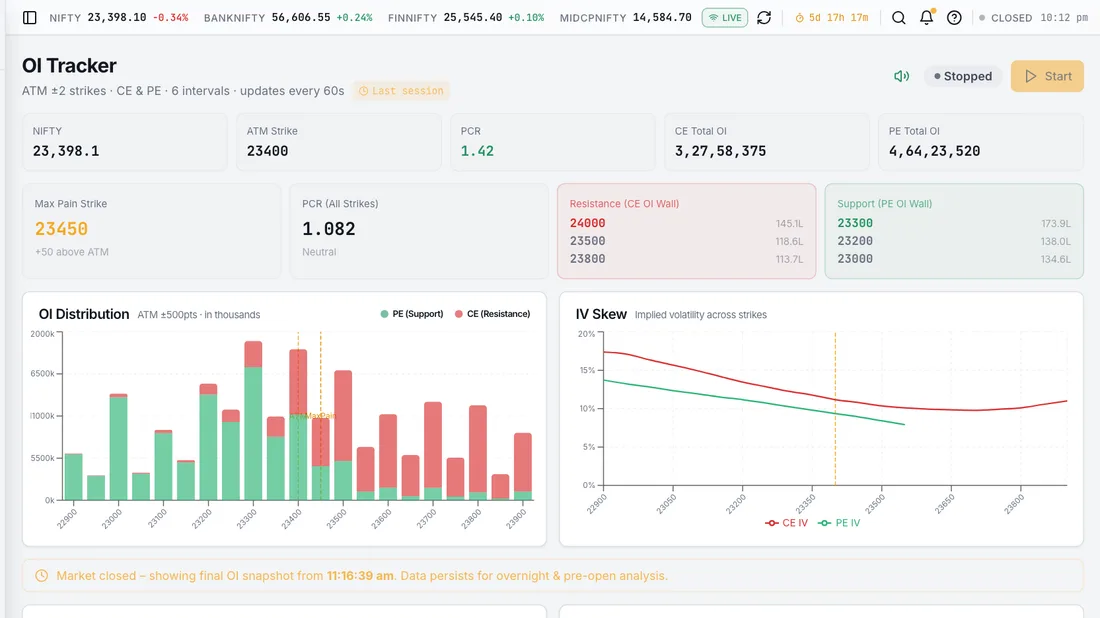
Computed from real OI
Every strike's call and put open interest, summed into a loss curve.
The whole chain
Strike-by-strike OI, change in OI, IV and Greeks behind the number.
Read with PCR
Max pain beside put-call ratio and IV rank, not as a lone figure.
Options & derivatives
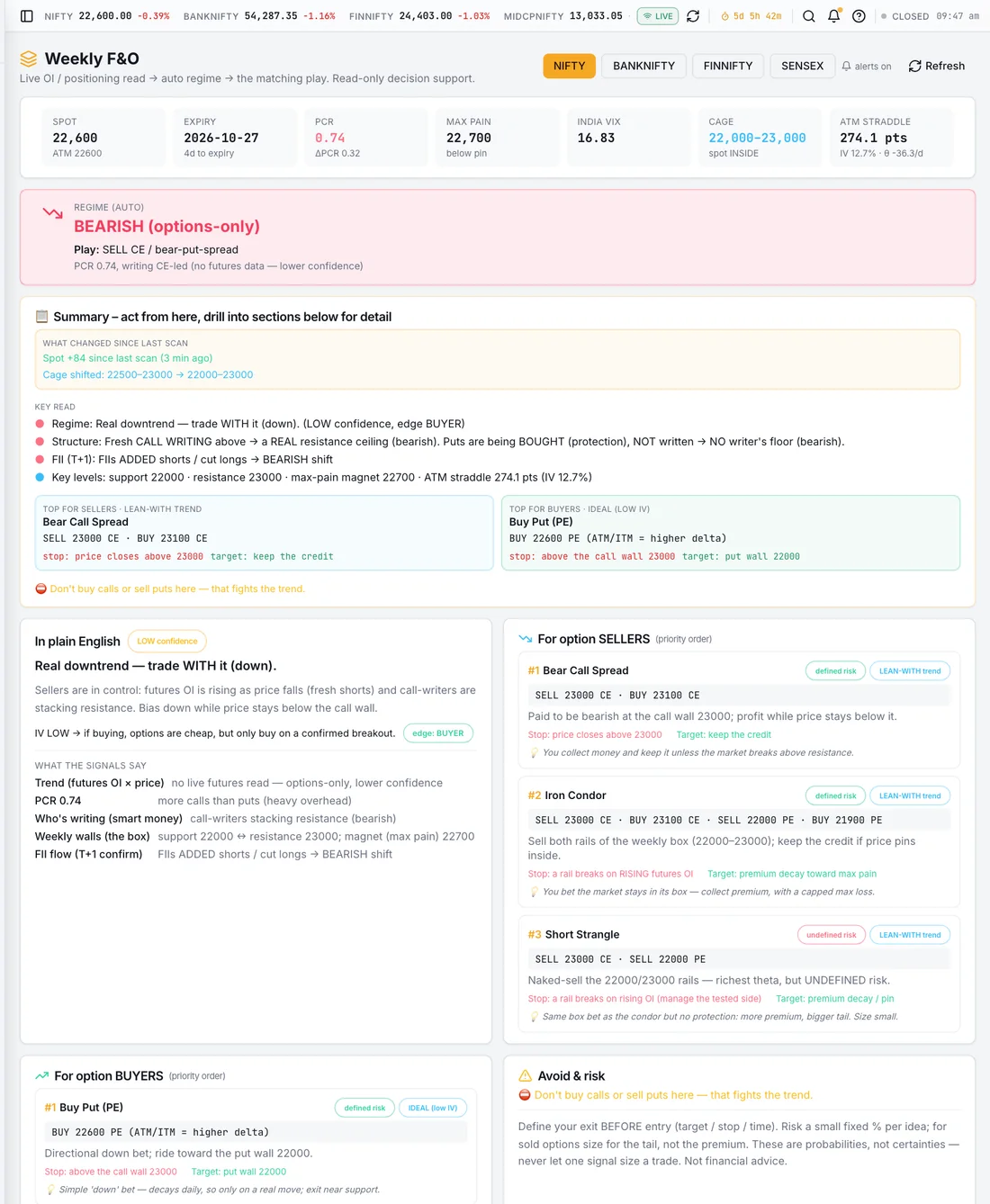
Weekly F&O Positioning
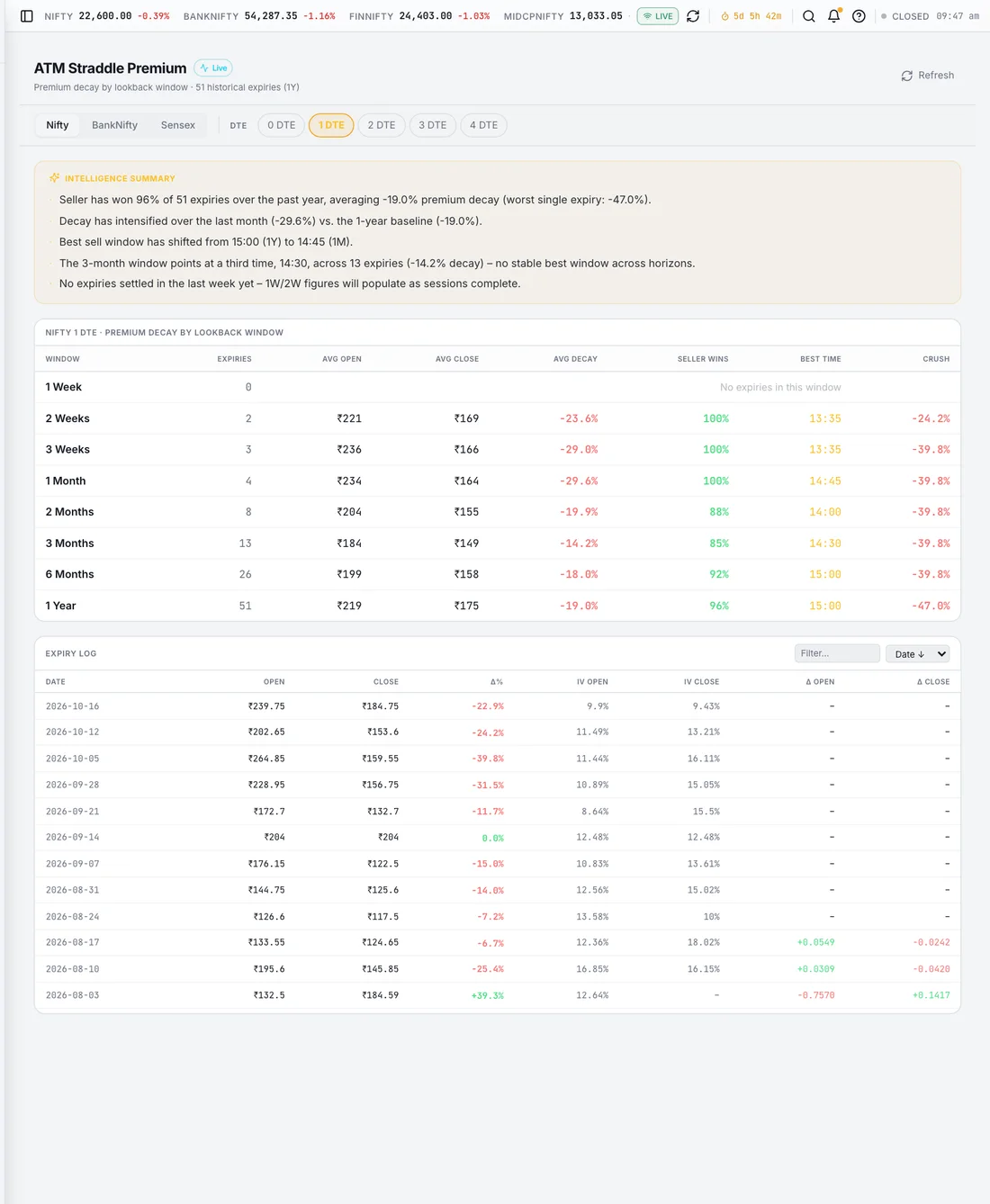
Straddle Premium
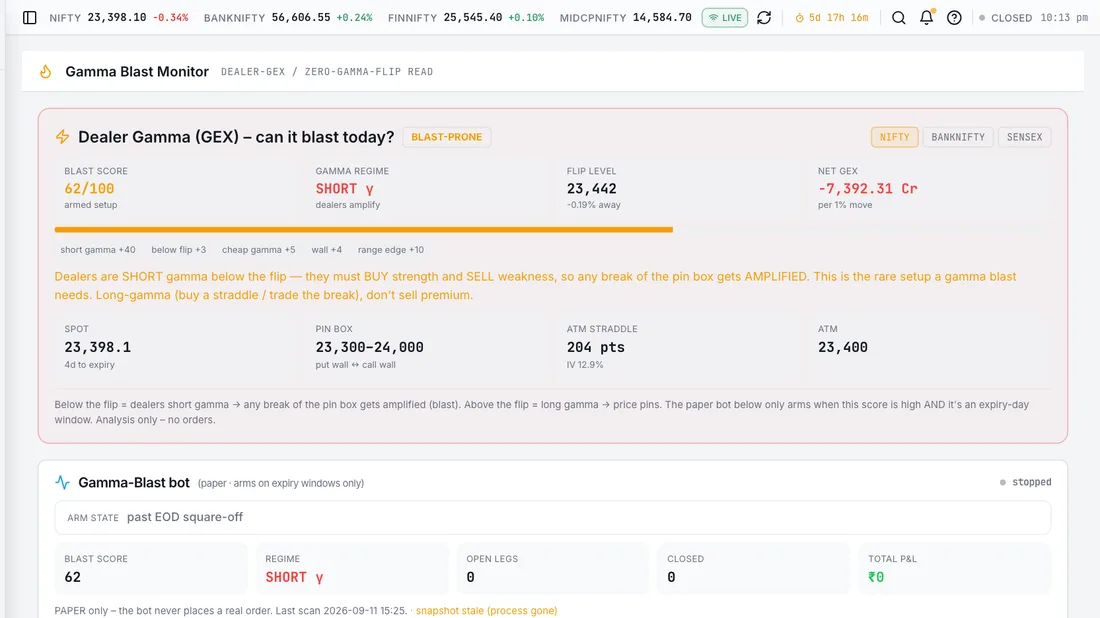
Gamma Blast Monitor
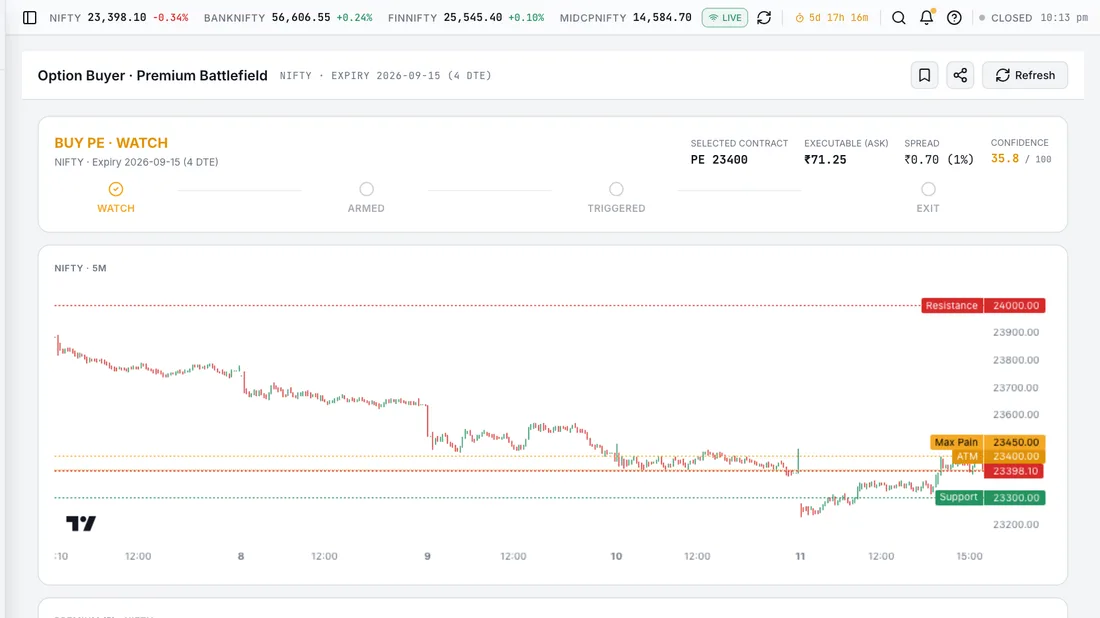
Option Buyer Battlefield
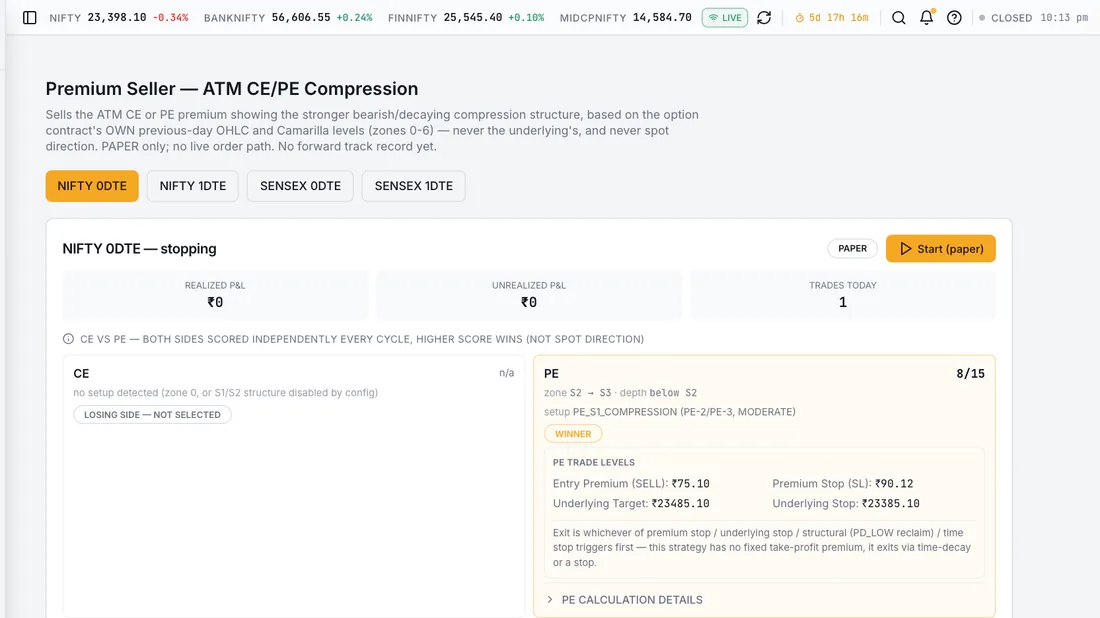
Premium Seller
swipe to browse
Common questions
What is max pain in the option chain?
The strike price at which the greatest rupee value of open call and put contracts would expire worthless. It is calculated by taking every strike in turn, assuming expiry settles there, and summing what all outstanding options would be worth; the strike where that total payout to buyers is smallest is max pain.
How is max pain calculated?
For each candidate strike, the intrinsic value of every open call and put at expiry is multiplied by its open interest and summed. The strike producing the lowest total intrinsic value across the whole chain is the max pain point. It is a function of open interest, so it moves as positions are opened and closed.
Does the index actually settle at max pain?
Often near it, frequently not at it. Max pain describes where the largest open position would expire worthless – a gravitational pull, not a forecast. It is most informative close to expiry, when open interest is concentrated and time value is small, and least informative weeks out. Treat it as one input beside PCR, IV and price structure rather than as a target.
What is max pain for SENSEX?
Orbis computes SENSEX max pain live from the BSE option chain, on the same basis as NIFTY and BANKNIFTY. SENSEX weekly expiry is Thursday, so the figure tends to tighten through Wednesday and Thursday as open interest concentrates around the near strikes.
How often does the max pain figure update?
It is recomputed from the live chain, so it moves intraday as open interest changes. Large shifts usually mean fresh positions have been written at a strike rather than that the market has moved.